Domain-Driven Design versus Refactoring.
Both show up on every "best" list. They're not competitors. They're a sequence. Here's which one to read first, and when.
Reviewed by Ashish Sheth · Updated July 2026
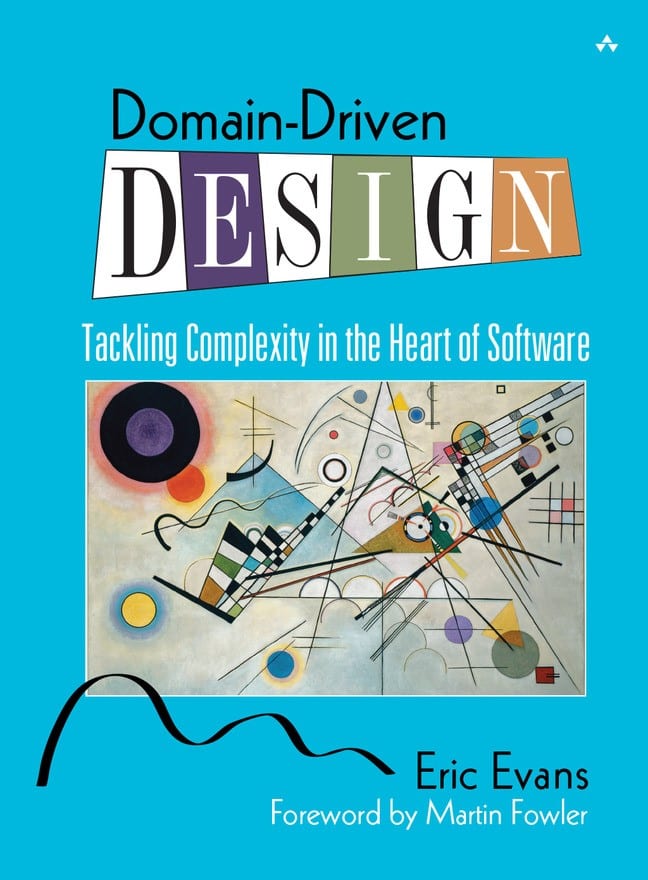
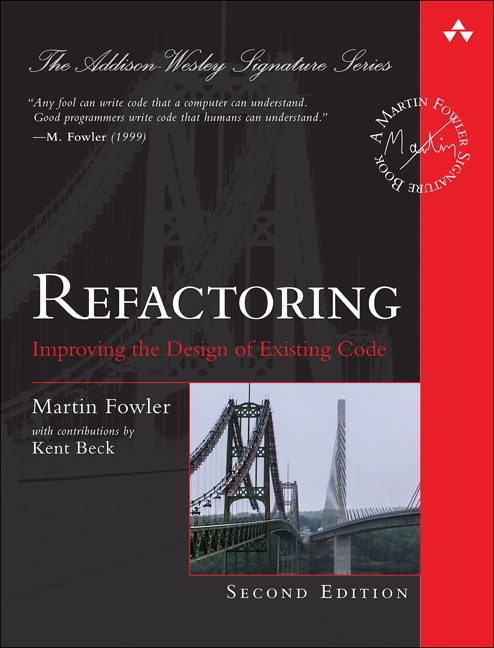
Author
Eric Evans
Martin Fowler
Pages
560
448
Published
2003
2019
Publisher
Addison-Wesley Professional
Addison-Wesley
Level
advanced
intermediate
Amazon Rating
4.5/5 (1,500)
4.7/5 (1,199)
Goodreads Rating
4.14/5 (5,371)
4.24/5 (8,860)
Domain-Driven Design
Strengths
+ The foundational text that named a whole discipline
+ Deep, patient treatment of modeling complex domains
+ Strategic design chapters age extremely well
+ Still cited constantly by architects two decades on
Caveats
− Long and dense at 560 pages, it asks for patience
− Java and early-2000s examples feel dated
− Many readers suggest starting with a shorter summary first
Refactoring
Strengths
+ The definitive catalog: a reference you return to for years
+ Second edition uses JavaScript, widening its reach
+ Each refactoring has clear mechanics you can follow step by step
+ Reframes refactoring as economics, not vanity cleanup
Caveats
− Reads like a reference, not a cover-to-cover narrative
− Some find the JavaScript examples less rigorous than the first edition Java
− The catalog format can feel repetitive read linearly
The verdict
Read Refactoring first to build foundations, then move to Domain-Driven Design for advanced concepts.
Domain-Driven Design
Check Price on Amazon →
Refactoring
Check Price on Amazon →
Frequently asked
Which is better, Domain-Driven Design or Refactoring?
Read Refactoring first to build foundations, then move to Domain-Driven Design for advanced concepts.
Is Domain-Driven Design still relevant in 2026?
Very. The tactical patterns and the strategic ideas, bounded contexts and ubiquitous language, underpin how modern teams split microservices and organize domains. The code examples are dated, but the thinking drives current architecture practice. It holds a 4.14 Goodreads rating across more than 5,000 ratings.
Is the 2nd edition of Refactoring worth it over the 1st?
Yes for most readers. The second edition modernizes examples to JavaScript, refreshes the catalog, and reflects two more decades of practice. Keep the first edition only if you specifically want the original Java mechanics. The core principles are unchanged.