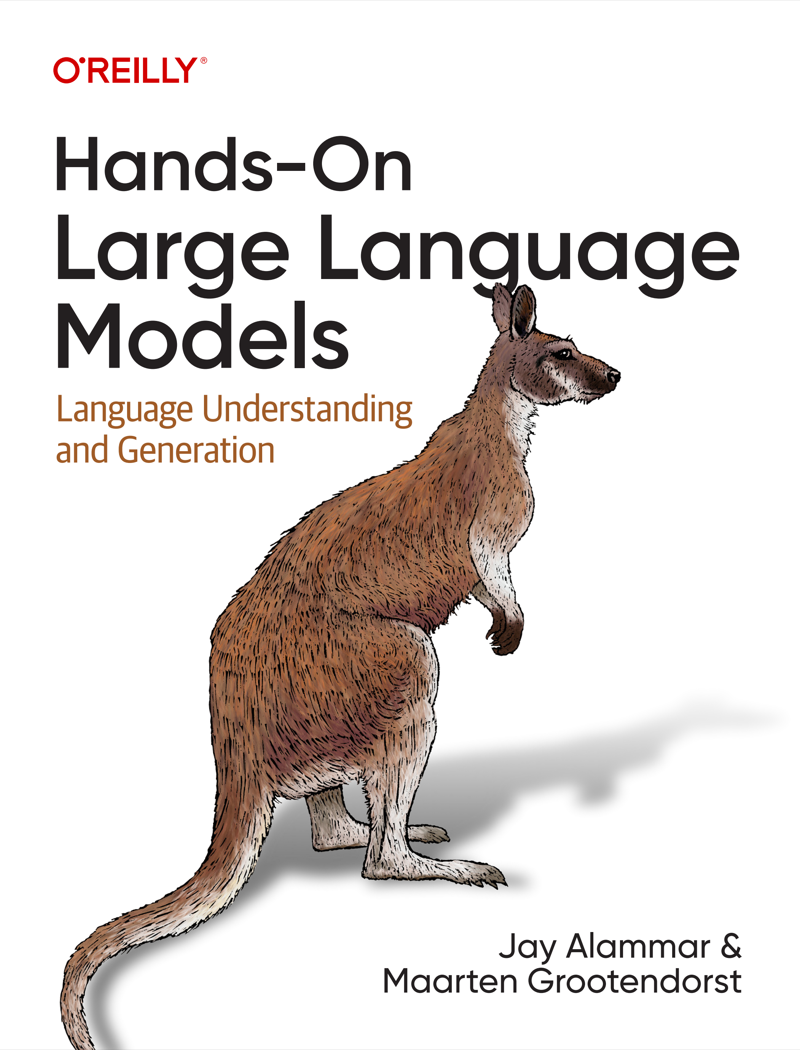
Pages
425
Year
2024
Level
beginner to intermediate
Read time
11h
Jay Alammar, Maarten Grootendorst · O'Reilly Media · 2024
Reviewed by Ashish Sheth · Updated May 2026
Hands-On Large Language Models
Language Understanding and Generation
4.5 / 5
AMAZON · 392 RATINGS
llm
SUBJECTS
What you'll come away with
01.
How transformers process text from tokenization to output generation
02.
Building semantic search with text embeddings and vector databases
03.
Practical RAG implementation with retrieval and reranking
04.
When to fine-tune vs when to prompt engineer
05.
How preference tuning (RLHF/DPO) aligns models with human intent
06.
Text clustering and topic modeling with LLMs
Strengths
+275+ custom diagrams make abstract concepts visual and intuitive
+Accessible to beginners without prior PyTorch/TensorFlow knowledge
+Practical code examples covering real use cases like semantic search and RAG
+Well-structured progression from foundations to advanced techniques
Caveats
−Limited depth on transformer internals despite the author's blog reputation
−Image generation sections lack clarity
−May be too introductory for experienced ML practitioners
★ 4.5 FROM 392 READERS ON AMAZON
Check Price on Amazon →
Read this if
→Developers building their first LLM-powered features who want visual explanations
→Engineers who learn better from diagrams than from math notation
→Anyone wanting practical LLM skills (search, RAG, classification) without a PhD
Skip this if
—Experienced ML engineers who already work with transformers daily
—People wanting deep mathematical understanding of attention mechanisms
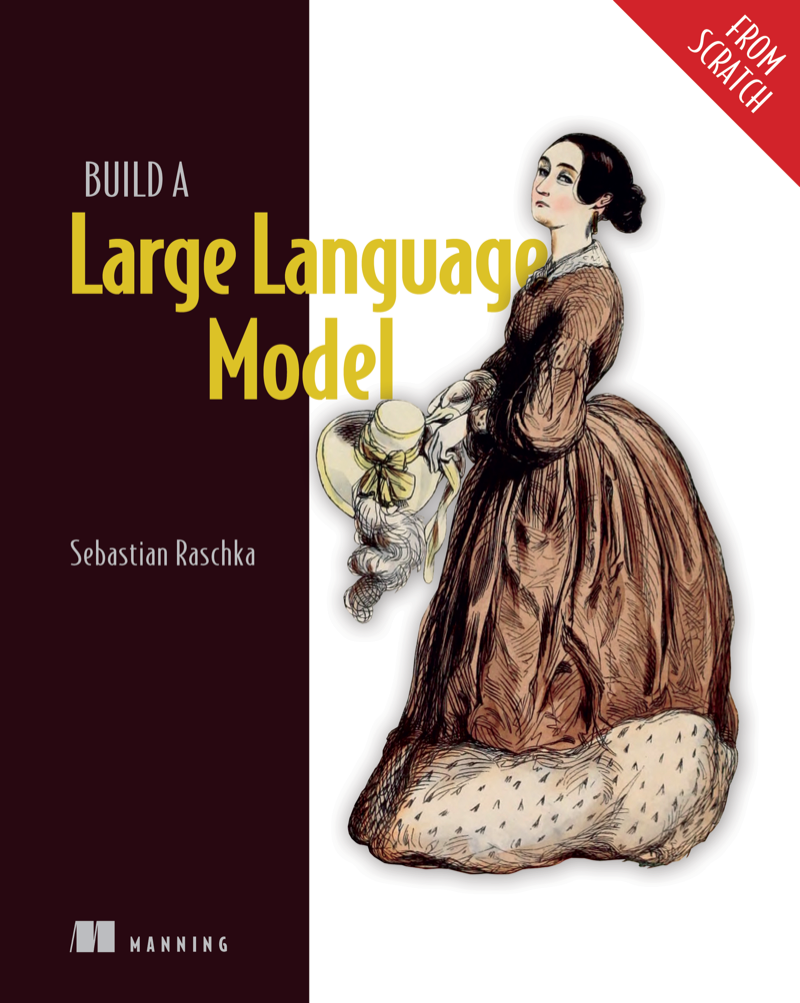
—Those focused on training LLMs from scratch (see Build a Large Language Model)
Head-to-head comparisons
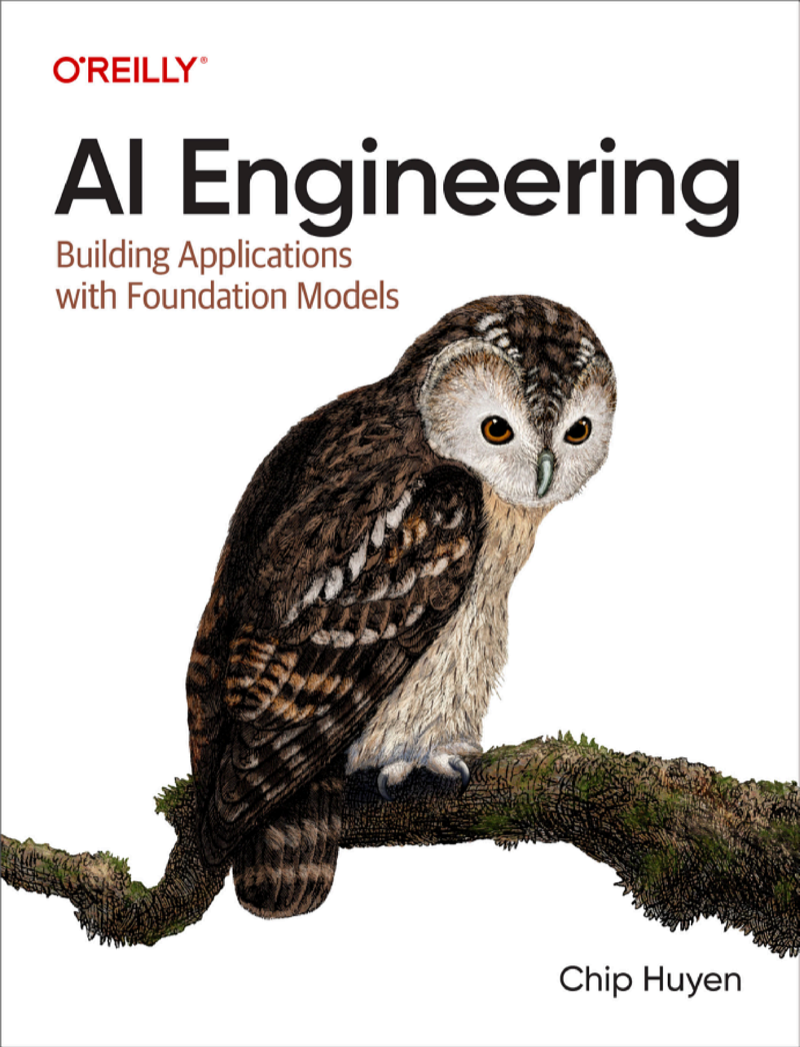
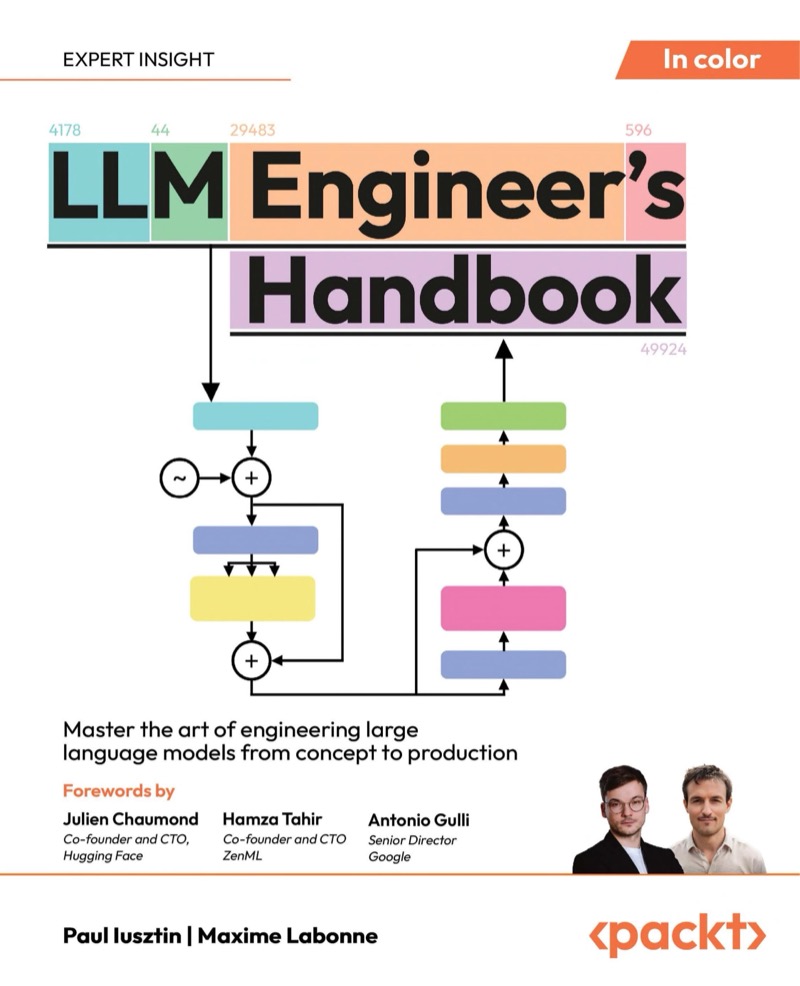
Hands-On Large Language Models vs LLM Engineer's Handbook → Hands-On Large Language Models vs Build a Large Language Model (From Scratch) → Hands-On Large Language Models vs AI Engineering → Hands-On Large Language Models vs Building LLMs for Production → Hands-On Large Language Models vs Prompt Engineering for LLMs → Hands-On Large Language Models vs Prompt Engineering for Generative AI → Hands-On Large Language Models vs Natural Language Processing with Transformers → Hands-On Large Language Models vs Generative Deep Learning → Frequently asked
Is Hands-On Large Language Models good for beginners?
Yes, it's one of the most beginner-friendly LLM books available. No PyTorch or TensorFlow experience needed. The 275+ diagrams carry a lot of the explanation load.
Does it cover GPT and ChatGPT?
It covers the architecture behind GPT-style models, BERT-style models, and how they're used in practice. It's not a ChatGPT tutorial, it's about understanding and using LLMs as a developer.
Does the book cover RAG and semantic search?
Yes. There are dedicated chapters on semantic search, text classification, and retrieval-augmented generation, with runnable Python examples. The book skews toward applying open-source models like BERT, Llama, and sentence transformers for these tasks rather than wrapping commercial APIs, so it pairs well with hands-on lab work.
Read this next
3 alternatives
Ready?
Check Price on Amazon →