The Web Application Hacker's Handbook versus Web Security for Developers.
Both show up on every "best" list. They're not competitors. They're a sequence. Here's which one to read first, and when.
Reviewed by Ashish Sheth · Updated August 2026
Option A
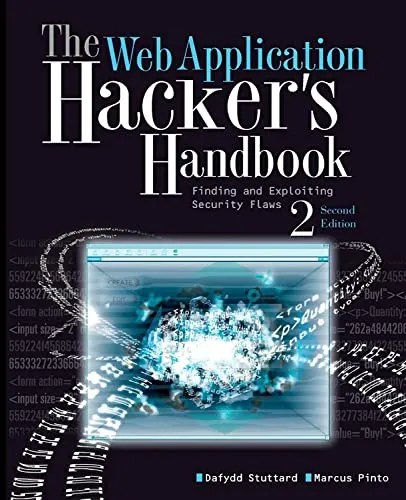
The Web Application Hacker's Handbook
Dafydd Stuttard, Marcus Pinto · 2011
READ FULL REVIEW →
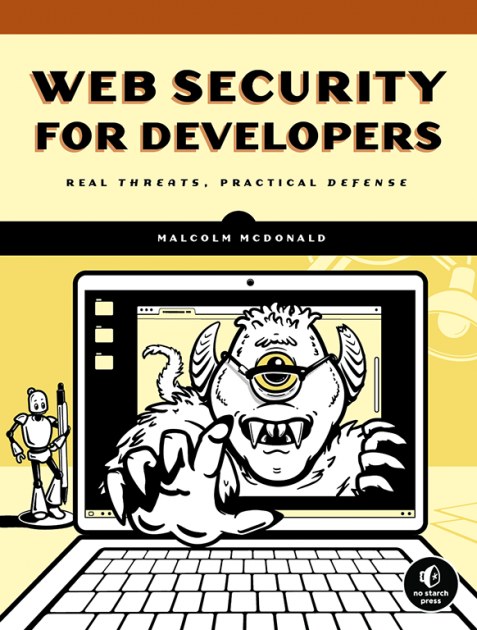
Author
Dafydd Stuttard, Marcus Pinto
Malcolm McDonald
Pages
912
216
Published
2011
2020
Publisher
Wiley
No Starch Press
Level
advanced
beginner
Amazon Rating
4.3/5 (329)
4.6/5 (108)
Goodreads Rating
4.35/5 (240)
4.02/5 (122)
The Web Application Hacker's Handbook
Strengths
+ The most thorough offensive web-security reference in print
+ Written by the creators of Burp Suite, so the methodology is battle-tested
+ Explains the why behind each attack, not just the steps
+ Its testing methodology still holds even as specific tech moves on
Caveats
− Published in 2011, so it predates modern single-page-app and API patterns
− Long and demanding at 912 pages; not a casual read
− No third edition, so newer client-side frameworks fall outside it
Web Security for Developers
Strengths
+ Short and readable; you can finish it in a weekend and act on it
+ Explains each attack with just enough theory before the fix
+ Written for developers, so the advice maps straight onto real code
+ A gentle on-ramp for anyone intimidated by security books
Caveats
− Deliberately broad and shallow; specialists will find it basic
− Light on modern single-page-app and API-specific concerns
− Not a reference you keep coming back to after the first read
The verdict
Read Web Security for Developers first to build foundations, then move to The Web Application Hacker's Handbook for advanced concepts.
The Web Application Hacker's Handbook
Check Price on Amazon →
Web Security for Developers
Check Price on Amazon →
Frequently asked
Which is better, The Web Application Hacker's Handbook or Web Security for Developers?
Read Web Security for Developers first to build foundations, then move to The Web Application Hacker's Handbook for advanced concepts.
Is The Web Application Hacker's Handbook still worth reading in 2026?
For the methodology, yes. It remains the most thorough guide to how web attacks work, and the testing approach still applies. The catch is age: the second edition is from 2011 and there is no newer one, so modern single-page apps, APIs, and frameworks are not covered. Pair it with PortSwigger's current online material.
Is Web Security for Developers good for beginners?
Yes. It assumes you can build a web app but have never studied security. Malcolm McDonald walks through each major attack with a short explanation and a concrete fix, so a working developer can follow along without a security background. Around 120 Goodreads readers rate it about 4.0, and most praise how approachable it stays.