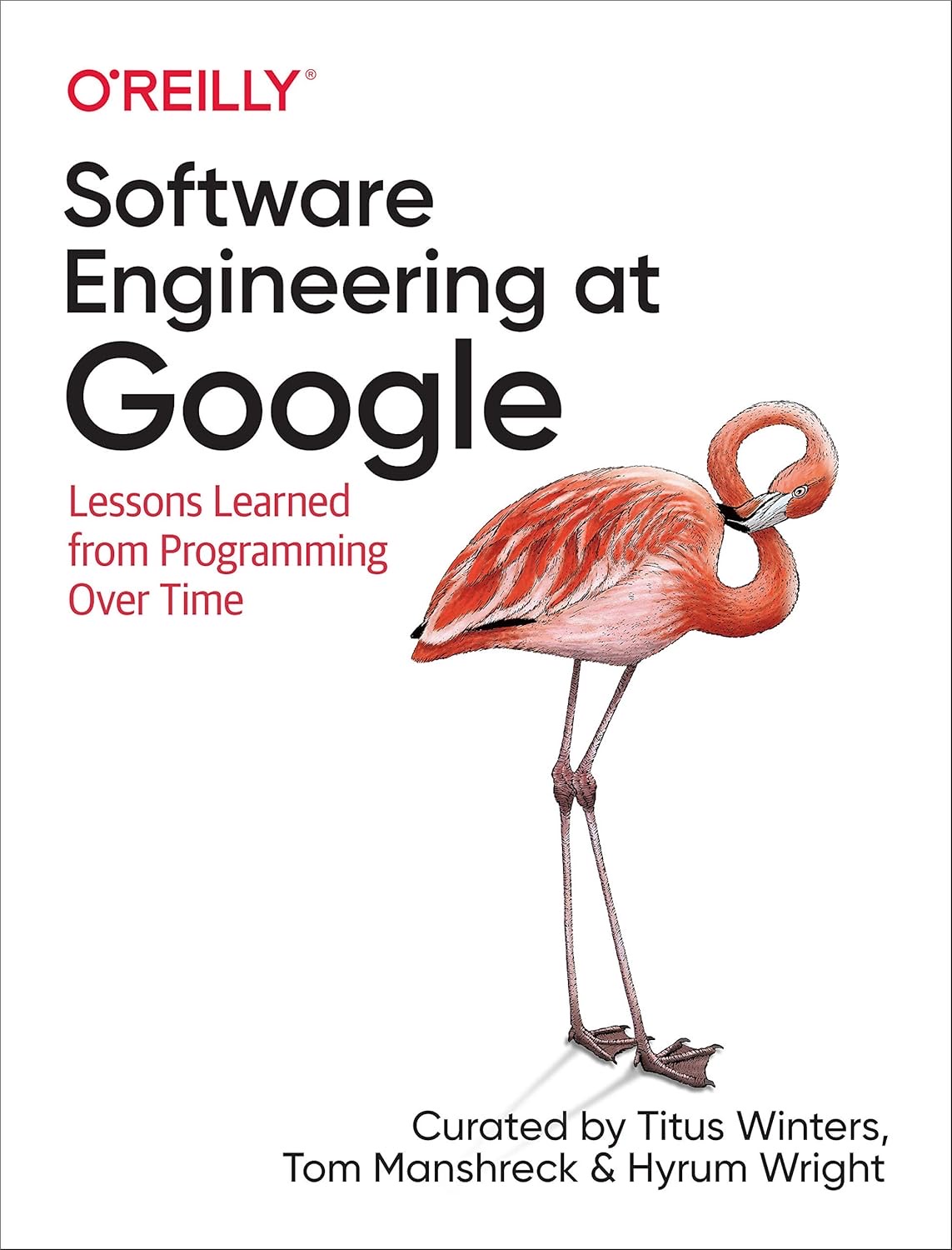
Pages
599
Year
2020
Level
intermediate to advanced
Read time
15h
Titus Winters, Tom Manshreck, Hyrum Wright · O'Reilly Media · 2020
Reviewed by Ashish Sheth · Updated June 2026
Software Engineering at Google
Lessons Learned from Programming Over Time
4.6 / 5
AMAZON · 712 RATINGS
engineering practices · software craft
SUBJECTS
What you'll come away with
01.
Why "software engineering" and "programming" are different disciplines
02.
How to make trade-offs explicit instead of letting them ossify by accident
03.
The actual mechanics behind code review, testing, and large-scale refactoring at Google scale
04.
Why monorepos and trunk-based development work — and what they cost
05.
How to think about dependencies as long-term liabilities, not free convenience
06.
Concrete patterns for testing pyramid, hermetic tests, and deflaking strategies
Strengths
+Honest about what worked, what didn't, and what's specific to Google's scale
+Best available treatment of large-scale code change and deprecation
+Each chapter stands alone — you can read just the topics you need
+Coined Hyrum's Law in a form every engineer should internalize
Caveats
−Some chapters are heavy on Google-specific tools (Blaze, Critique, Piper)
−Cultural chapters can feel like recruiting marketing in places
−Less directly applicable at a 10-person startup than at a 1,000-person company
★ 4.6 FROM 712 READERS ON AMAZON
Check Price on Amazon →
Read this if
→Engineers at companies growing past the "small team" stage
→Tech leads picking version control, testing, and dependency policies
→Staff engineers shaping long-term engineering practices
Skip this if
—Solo developers or very small teams where Google-scale practices over-rotate
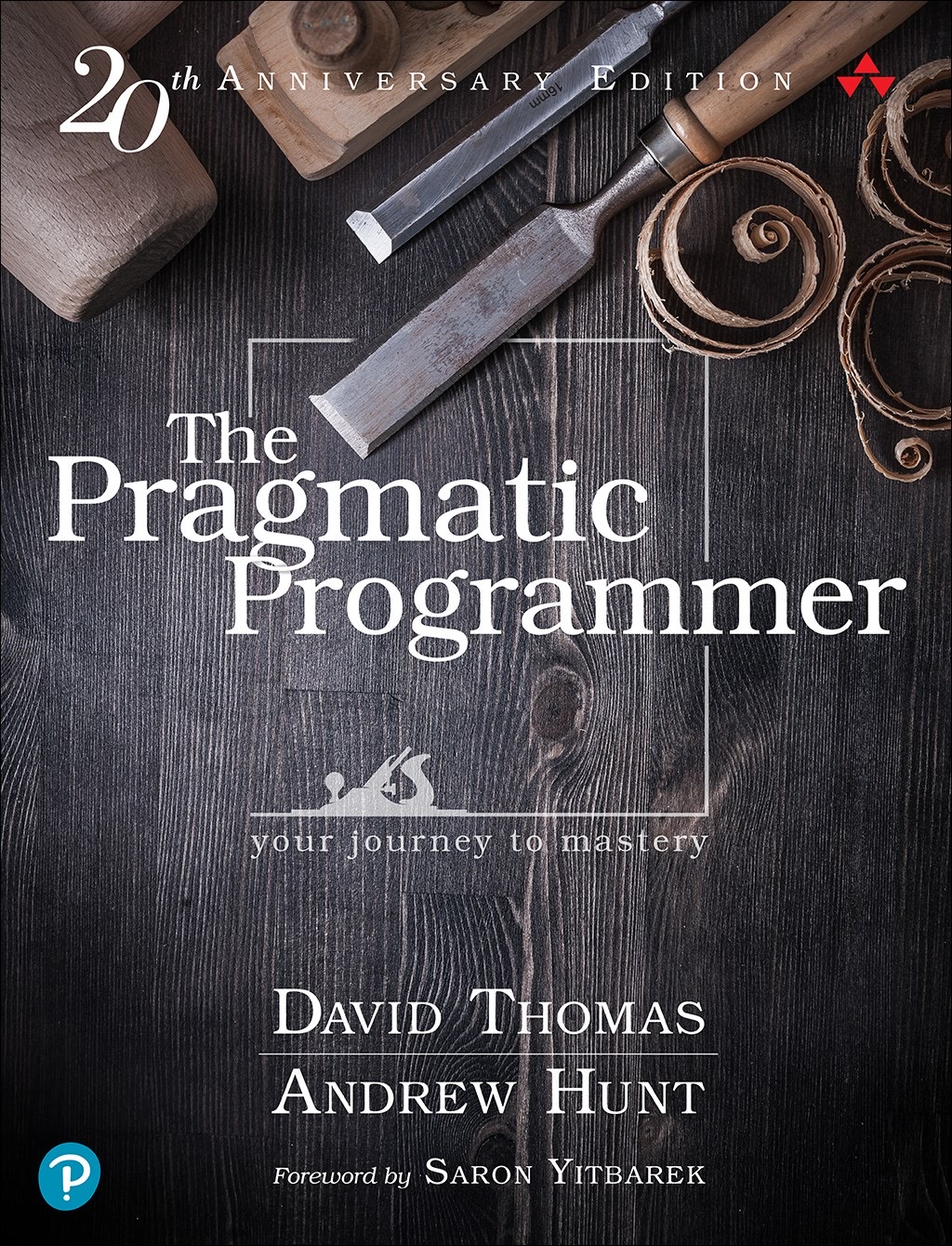
—Engineers looking for a pure coding-craft book (read Pragmatic Programmer)
—People who want a specific tutorial in any one technology
Head-to-head comparisons
Software Engineering at Google vs Designing Data-Intensive Applications → Software Engineering at Google vs The Pragmatic Programmer → Software Engineering at Google vs A Philosophy of Software Design → Software Engineering at Google vs Team Topologies → Software Engineering at Google vs Tidy First? → Software Engineering at Google vs Fundamentals of Software Architecture → Software Engineering at Google vs The Software Engineer's Guidebook → Software Engineering at Google vs The DevOps Handbook → Software Engineering at Google vs Accelerate → Software Engineering at Google vs Staff Engineer → Frequently asked
Is Software Engineering at Google only useful if you work at a big company?
Most chapters apply at any team size of about 20+ engineers. The book is explicit about which practices need scale to pay off and which work even on small teams — read the testing, code review, and deprecation chapters first; treat the monorepo and infrastructure chapters as context.
Is Software Engineering at Google about Google's tools or general practices?
Both. The principles (testing pyramid, Hyrum's Law, dependency hygiene, large-scale change) are general. The specific tools (Blaze/Bazel, Critique, Piper) are Google's, used as concrete examples. You're meant to extract the patterns, not adopt Google's stack.
Is Software Engineering at Google free to read?
Google has not released a free official edition. O'Reilly sells the print and ebook; the book has a website at abseil.io/resources/swe-book that summarizes some chapters. For full coverage, you need the book.
Read this next
4 alternatives
Ready?
Check Price on Amazon →