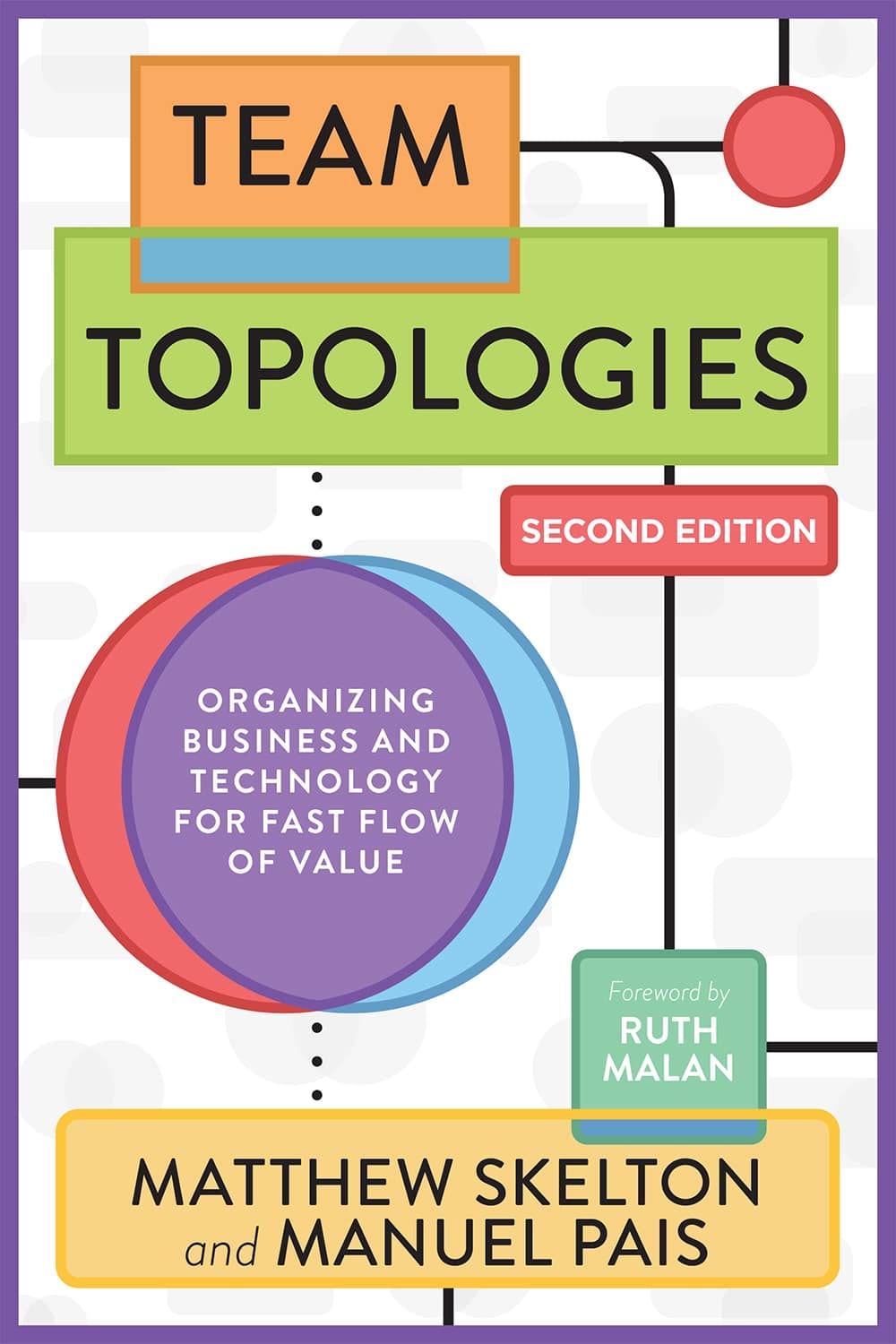
Pages
240
Year
2025
Level
intermediate
Read time
6h
Matthew Skelton, Manuel Pais · IT Revolution Press · 2025
Reviewed by Ashish Sheth · Updated July 2026
Team Topologies
Organizing Business and Technology Teams for Fast Flow
4.5 / 5
AMAZON · 2.9K RATINGS
engineering practices
SUBJECTS
What you'll come away with
01.
Why team structure quietly dictates your architecture
02.
How to size a team's scope to its cognitive load
03.
What a stream-aligned team is and why it is the default
04.
When to use an enabling or platform team
05.
How to change team shape on purpose rather than by accident
Strengths
+Gives clear names to team patterns people felt but could not describe
+Short and well-structured, readable in a weekend
+Grounded in Conway's Law and real DevOps research
+Widely adopted, so it creates shared language across an org
Caveats
−More a model and vocabulary than a detailed implementation guide
−Some readers find the core ideas could fit a long article
−Applying it well still needs leadership buy-in you supply yourself
★ 4.5 FROM 2.9K READERS ON AMAZON
Check Price on Amazon →
Read this if
→Engineering leaders redesigning how teams are organized
→Platform and infrastructure teams defining their remit
→Architects who want structure and org design to line up
Skip this if
—Individual contributors with no say in team structure
—Very small startups running as a single team
—Readers wanting deep technical, rather than organizational, content
Head-to-head comparisons
Team Topologies vs Software Engineering at Google → Team Topologies vs The DevOps Handbook → Team Topologies vs Accelerate → Team Topologies vs Observability Engineering → Frequently asked
Who is Team Topologies for?
It is written for engineering leaders, managers, architects, and platform teams who influence how people are organized. If you decide team boundaries, ownership, or how a platform team serves product teams, the model gives you clear language and patterns. Around 5,400 Goodreads readers rate it 4.18.
Is Team Topologies only useful for big companies?
No. The core ideas, cognitive load, stream-aligned teams, and clear interaction modes, scale down to a handful of teams. Small and mid-size organizations use it to avoid growing into a tangled structure, while larger ones use it to untangle one they already have.
Is Team Topologies a quick read?
Yes. At 240 well-organized pages it reads comfortably in a weekend, and the diagrams make the patterns easy to reference later. Many teams treat it as a shared vocabulary, reading it together and then applying the four team types to their own org chart.
Read this next
4 alternatives

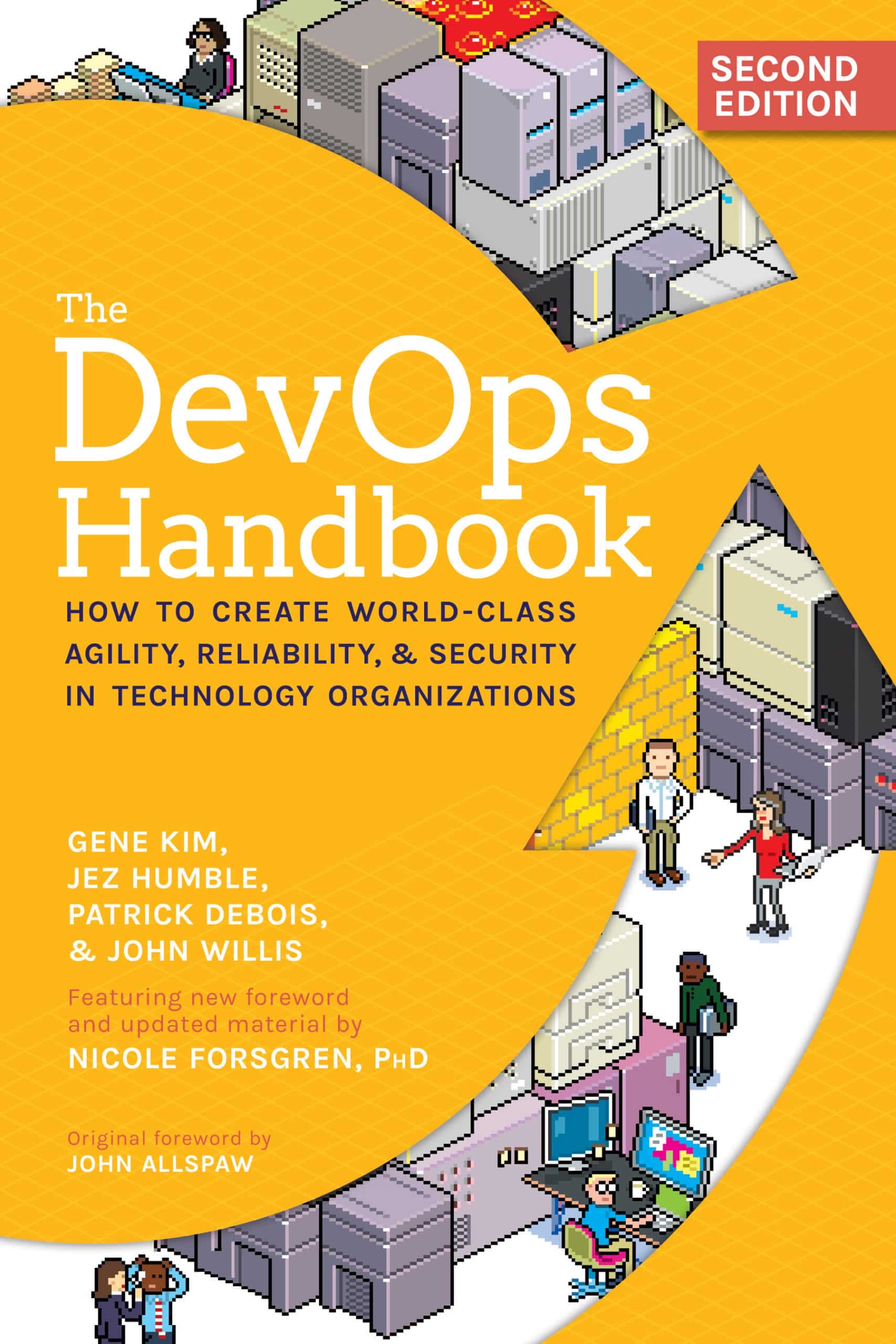

Ready?
Check Price on Amazon →