Pages
344
Year
2022
Level
intermediate
Read time
9h
Roberto Vitillo · Roberto Vitillo · 2022
Reviewed by Ashish Sheth · Updated July 2026
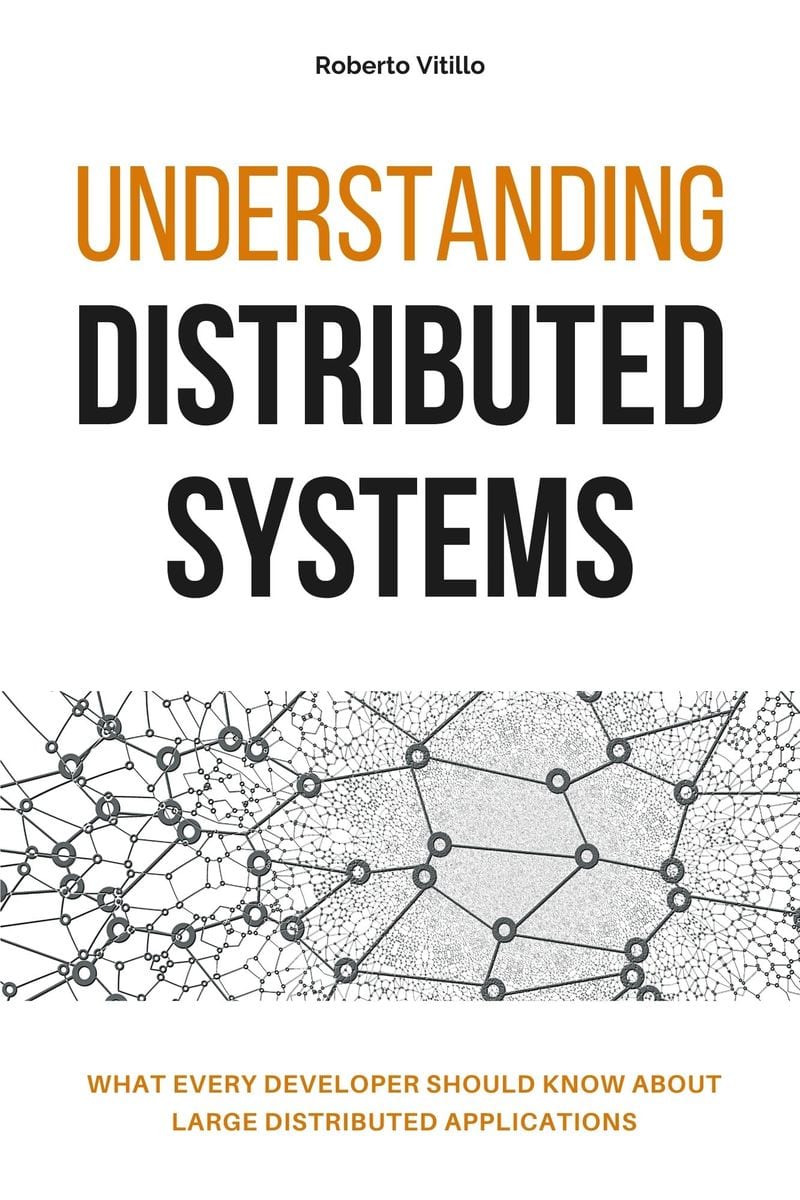
Understanding Distributed Systems
What Every Developer Should Know About Large Distributed Applications
4.5 / 5
AMAZON · 112 RATINGS
system design
SUBJECTS
What you'll come away with
01.
How the core building blocks of distributed systems fit together
02.
Why network failures shape almost every design choice
03.
How replication and consensus keep data correct across nodes
04.
When to reach for partitioning, caching, or load balancing
05.
How to reason about consistency trade-offs without hand-waving
06.
A vocabulary for system design interviews and design reviews
Strengths
+Concise and readable, it covers a lot of ground in under 350 pages
+Strong at connecting concepts rather than just listing them
+Practical framing aimed at working developers, not researchers
+A popular self-study and interview-prep companion to Designing Data-Intensive Applications
Caveats
−Breadth over depth: each topic is an introduction, not a deep dive
−Few worked code examples
−Readers who already know the basics may find parts too high-level
★ 4.5 FROM 112 READERS ON AMAZON
Check Price on Amazon →
Read this if
→Backend and full-stack engineers who never took a distributed systems course
→Anyone prepping for system design interviews who wants one clear map of the field
→Engineers who found DDIA dense and want a shorter on-ramp first
Skip this if
—Researchers or engineers who already design consensus protocols
—Readers who want deep, code-level implementations of each algorithm
Head-to-head comparisons
Understanding Distributed Systems vs Designing Data-Intensive Applications → Understanding Distributed Systems vs Database Internals → Frequently asked
Is Understanding Distributed Systems good for beginners?
It suits developers who can already build a web service but have not studied distributed systems formally. It assumes you know basic networking and databases, then explains communication, coordination, and consistency from there. Pure beginners to programming will find it fast paced.
How is it different from Designing Data-Intensive Applications?
Vitillo's book is shorter and broader, closer to a guided map of the whole field at about 344 pages. DDIA goes far deeper on storage and streaming across 600-plus pages. Many readers use this one first, then move to DDIA for depth.
Is Understanding Distributed Systems still worth reading in 2026?
Yes. The second edition, a full rewrite published in 2022, covers fundamentals that rarely change: consensus, replication, partitioning, and failure handling. It carries a 4.37 rating on Goodreads across more than 500 reader ratings.
Does it help with system design interviews?
It gives you the vocabulary and mental models interviewers look for, from load balancing to consistency trade-offs. Pair it with hands-on practice and mock interviews, since the book teaches concepts rather than a scripted interview format.
Read this next
2 alternatives
Ready?
Check Price on Amazon →